
The Timber Claw Grind: Pro Jig Techniques for Big Bass
At Anchor & Line Outfitters, we preach a simple truth: Success on the water is not a matter of luck; it is a direct result of discipline, preparation, and the willingness to embrace the grind. Fishing, much like any high-stakes endeavor, is about situational awareness: understanding the environment, selecting the right tool for the mission, and executing with precision.
When we talk about the "grind," we aren't just talking about hours spent behind the reel. We are talking about the mental fortitude required to pick apart heavy cover where others fear to cast. We are talking about the tactical advantage provided by gear designed to survive the "nasty stuff." This brings us to the centerpiece of our arsenal: the 1/2 oz Timber Claw Jig.
Whether you are navigating a submerged forest or dissecting a deep-water ledge, the Timber Claw isn't just a lure: it's a commitment to excellence.
The Tool: Why the 1/2 oz Timber Claw Stands Alone
In the world of bass fishing, the jig is the ultimate blue-collar bait. It’s a tool built for the heavy lifters. However, not all jigs are created equal. We engineered the Timber Claw with a specific set of principles in mind: efficiency, durability, and lethality.
The 1/2 oz weight is what we call the "sweet spot." It is heavy enough to punch through thick canopy and maintain contact with the bottom in twenty feet of water, yet light enough to provide a natural, seductive fall that triggers a predatory response.
The Snag-Resistant Advantage
The defining feature of the Timber Claw is its head design. Most jigs fail when they meet resistance: getting wedged in the fork of a branch or buried in a rock crevice. Our snag-resistant head is tapered to deflect off timber and crawl over obstructions rather than biting into them. This allows you to stay in the strike zone longer, maximizing your high-percentage opportunities.
A Color Palette for Every Mission
Situational awareness extends to your color selection. We offer the Timber Claw in five distinct, pro-grade patterns available in our tackle shop:
Ozark Red Back: Perfect for stained water or early spring when crawdads are active and vibrant.
Midnight Reservoir: The tactical choice for low-light conditions, deep water, or heavily stained environments where a strong silhouette is mandatory.
Biolume: A versatile pattern that mimics natural forage with a hint of "pop" to grab attention in varying light.
Clear Water Smoke: For those high-pressure days in gin-clear water where subtlety and realism are the keys to victory.
Green Pumpkin Edge: The gold standard. A natural, high-confidence color that works in almost any water clarity across the country.
Technique #1: Flipping and Pitching : Close Quarters Combat
Flipping and pitching represent the front lines of bass fishing. This is about execution and accuracy. It is the discipline of placing your jig into a space no larger than a coffee mug from twenty feet away. In heavy timber, the big bass: the ones that have survived by being smart: hide in the darkest, most tangled shadows.
The Strategy
When you are flipping a 1/2 oz Timber Claw into standing timber, you are looking for the "heart" of the cover. Don't just cast at the tree; cast into the branches. The snag-resistant head of the Timber Claw is designed for exactly this.
The Approach: Keep your boat at a distance to avoid spooking fish. Use a quiet, underhand "pitch" to deliver the jig with minimal splash.
The Fall: Watch your line. Many strikes occur on the initial descent. If the line "ticks" or moves sideways, set the hook immediately.
The Contact: Let the jig hit the bottom, then lift it slightly and "hop" it over a submerged limb. This moment: the moment the jig clears the wood and falls again: is the highest-percentage strike time.
Winning in the "nasty stuff" breeds a specific kind of confidence. It’s about knowing your gear won't fail when the mission gets difficult.
Technique #2: Dragging : The Bottom Grind
If flipping is close-quarters combat, dragging is long-range reconnaissance. This technique is essential for working deep points, ledges, and offshore humps. It is a slow, deliberate process that requires patience and focus.
Navigating the Terrain
When you drag a jig, you aren't just looking for a fish; you are mapping the bottom. The 1/2 oz Timber Claw provides the perfect amount of feedback through your rod. You should be able to feel the difference between mud, sand, and rock.
Maintain Constant Contact: Keep your rod tip low and move the jig by sweeping the rod to the side, not by reeling.
The Pause: The most important part of the drag is the pause. Bass often follow a dragging jig for several yards before deciding to strike. When the jig stops moving, it looks like a vulnerable crawdad.
The Feedback: If you feel the jig get "heavy" or if you feel a "thump-thump," you’ve made contact with a bass.
This technique translates to a broader life lesson: Consistency breeds results. By methodically covering ground, you increase your chances of finding the school.
Technique #3: Swimming : Versatility in Motion
While the Timber Claw excels on the bottom, it is equally effective as a mid-water column tool. Swimming a jig is a versatile approach that allows you to cover water quickly while still offering the bulky profile of a jig.
The Tactical Transition
You can transition from a drag to a swim in the middle of a single cast. If you are dragging the bottom and come across a patch of submerged vegetation or a vertical piece of timber, you can begin a steady retrieve to "swim" the bait past the cover.
Vary the Cadence: Don't just reel in a straight line. Give the rod tip small twitches to make the skirt flare. This mimics a fleeing baitfish or a swimming craw.
Target the Edges: Swim the Timber Claw along the edges of docks or weed lines. The 1/2 oz weight keeps the bait deep enough to stay in the strike zone even with a moderate retrieve speed.
The Anchor & Line Lifestyle: Fueling the Grind
At Anchor & Line Outfitters, we are more than just a retail store. We are a Veteran-Owned and operated outfit that believes in the values of hard work and community. We know that the best days on the lake start long before the sun comes up.
The Morning Ritual
The "Timber Claw Grind" starts in the kitchen. For the early morning haul to the boat ramp, we recommend fueling up with our A&L Coffee. Whether you’re brewing a pot at home or taking a coffee cup on the road, our coffee is designed for those who value the discipline of the early start.
Dress for the Mission
If you’re going to fish like a pro, you should look the part. Our Timber Claw T-shirt isn't just apparel: it's a badge of honor for those who aren't afraid to get their hands dirty. Pair it with one of our hats and a jacket for those chilly morning runs, and you’re ready for whatever the water throws at you.
The Philosophical Summary: Discipline on and off the Water
Mastering the jig is more than a fishing technique; it’s a mindset. It requires you to see clearly, plan effectively, and act with discipline. Just as we navigate the complexities of heavy timber with a Timber Claw jig, we must navigate the challenges of life with the same level of focus and intent.
Core Principles of the Timber Claw Grind:
Situational Awareness: Know your environment and adapt your technique (Flipping, Dragging, or Swimming) to the conditions.
Strategic Selection: Use the right tool: the 1/2 oz Timber Claw: in the right color for the mission.
Deliberate Execution: Every cast has a purpose. Avoid "mindless" fishing; stay focused on the "feel" of the bait.
Consistency: The grind isn't always easy, but the results go to those who stay on the water and keep their line wet.
Whether you're a seasoned tournament pro or a weekend warrior, the Timber Claw Jig is your competitive advantage. Visit our online shop today to stock up on your favorite colors and join the Anchor & Line community.
We’ll see you at the ramp. Stay focused, stay disciplined, and keep grinding.
Explore more at Anchor & Line Outfitters:
The Ultimate Guide to Bass Fishing Tackle: What Every Angler Needs in 2026
![[HERO] The Ultimate Guide to Bass Fishing Tackle: What Every Angler Needs in 2026](https://cdn.marblism.com/F57qOIBvIOI.webp)
We believe that bass fishing tackle isn't just about filling a boat or a tackle box : it's about preparation, confidence, and execution. The right bass fishing gear translates to more time fishing and less time guessing. Whether you're a tournament angler running forward-facing sonar or a weekend warrior hitting local docks, your tackle setup reflects your commitment to the discipline.
This is the 2026 ultimate guide to building a pro-grade bass fishing tackle arsenal that works. No fluff. Just what serious anglers need.
Why Your Tackle Matters More Than You Think
Every piece of fishing tackle online you add to your box should serve a purpose. High-percentage lures breed confidence. Confidence breeds better presentations. Better presentations lead to more bites : on the water and in every area where focus and preparation matter.
The gear you carry shapes how you fish. It determines whether you commit to that gnarly laydown or skip it because you don't trust your jig. It's the difference between adapting to changing conditions and sticking with what's comfortable but ineffective.
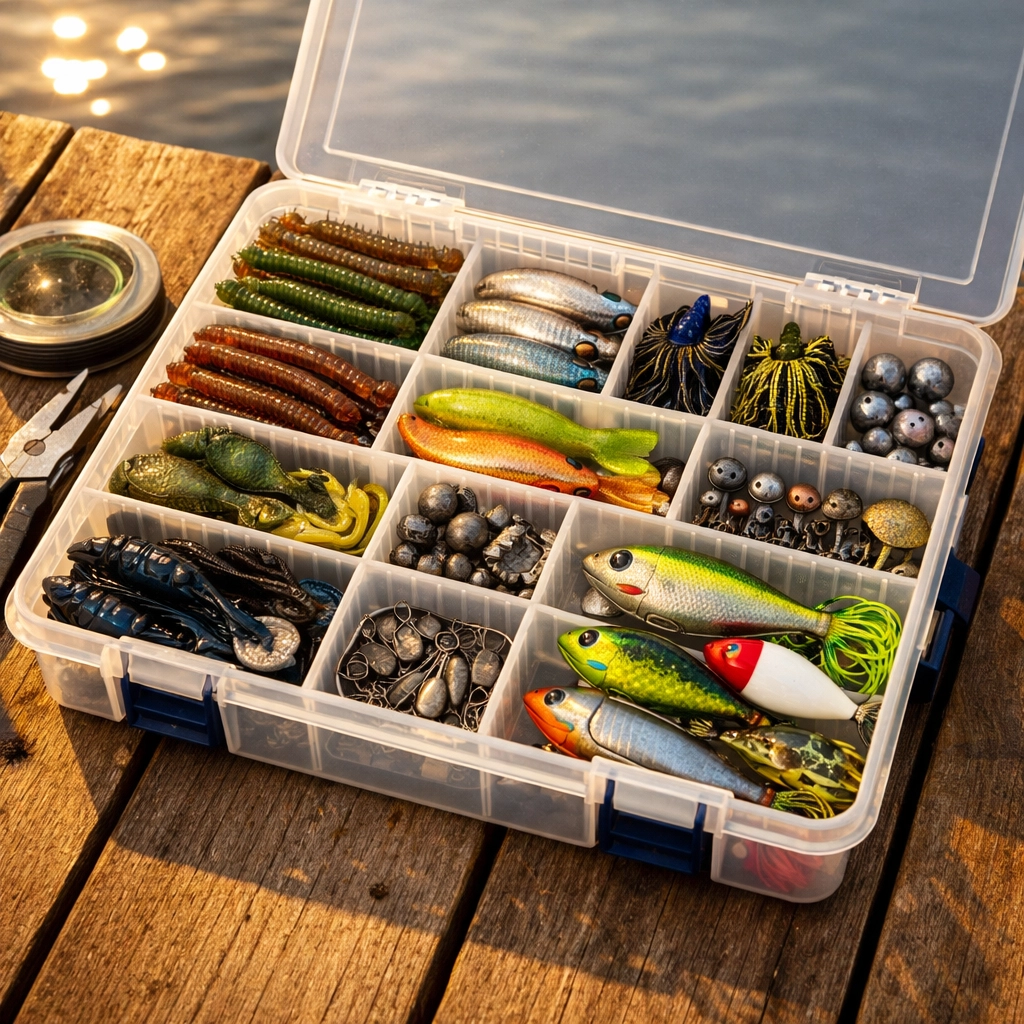
The Core Bass Fishing Tackle Categories for 2026
Soft Plastic Baits: The Foundation
Soft plastics form the backbone of modern bass fishing. These are the best bass lures for versatility, and 2026 has brought refinements that matter.
Stick baits and finesse worms like the Z-Man Finesse TRD remain industry standards because they work under pressure. The Zoom Thick Trick Worm : a beefier version of the classic : casts better and draws bigger bites when skipped under docks or pitched into heavy cover.
Creature baits continue to dominate flipping and punching scenarios. Lake Fork's Pro Hog excels in mat-fishing and bed-fishing situations where you need a bulky profile that provokes reaction strikes.
Fuzzy baits emerged strong in 2025 and aren't going anywhere. The Z-Man Fuzzy TRD and Strike King Tumbleweed bring a 12-sided, heavily salted design that works in both sinking and floating formulas. They excel in finesse applications where traditional soft plastics get ignored.
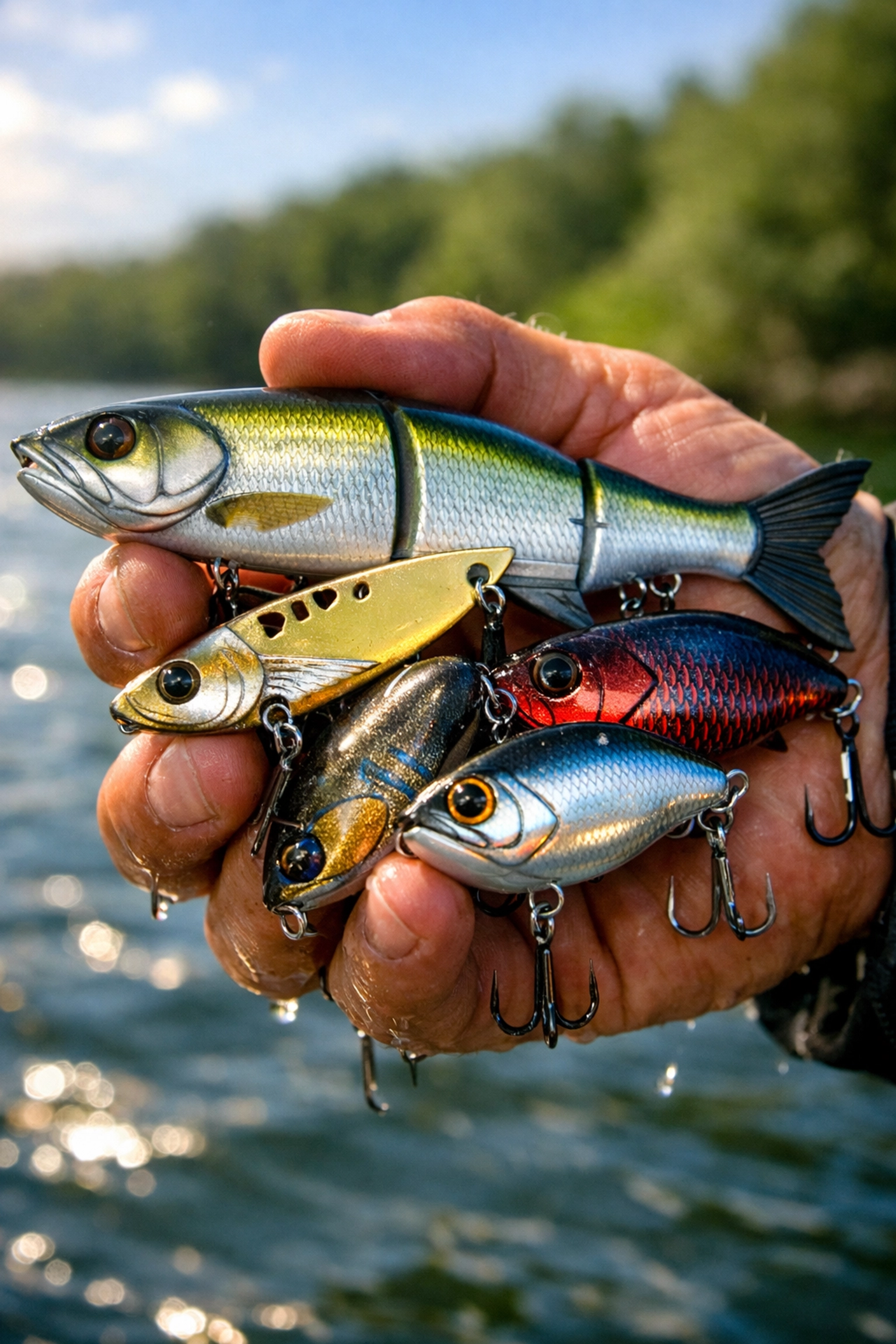
Hard Baits: Searching and Triggering Bites
Hard baits give you the ability to cover water efficiently and trigger reaction strikes from neutral fish.
Blade baits and spoons remain essential for deep, cool-water scenarios. Their wobble and vibration on the fall trigger bites when bass are lethargic.
The Berkley Chop Block (a two-segmented glide bait in 6", 8", and 10" versions) provides a tournament-grade presentation for big fish. The Berkley Ripfish combines the fast-drop characteristics of a lipless crankbait with glide bait advantages and flat-bottom design for precise depth control.
For forward-facing sonar techniques, the Strike King Spotlight Split Minnow (3" and 4") features a hyper-realistic profile with a split-tail design for depth control and precise strolling presentations.
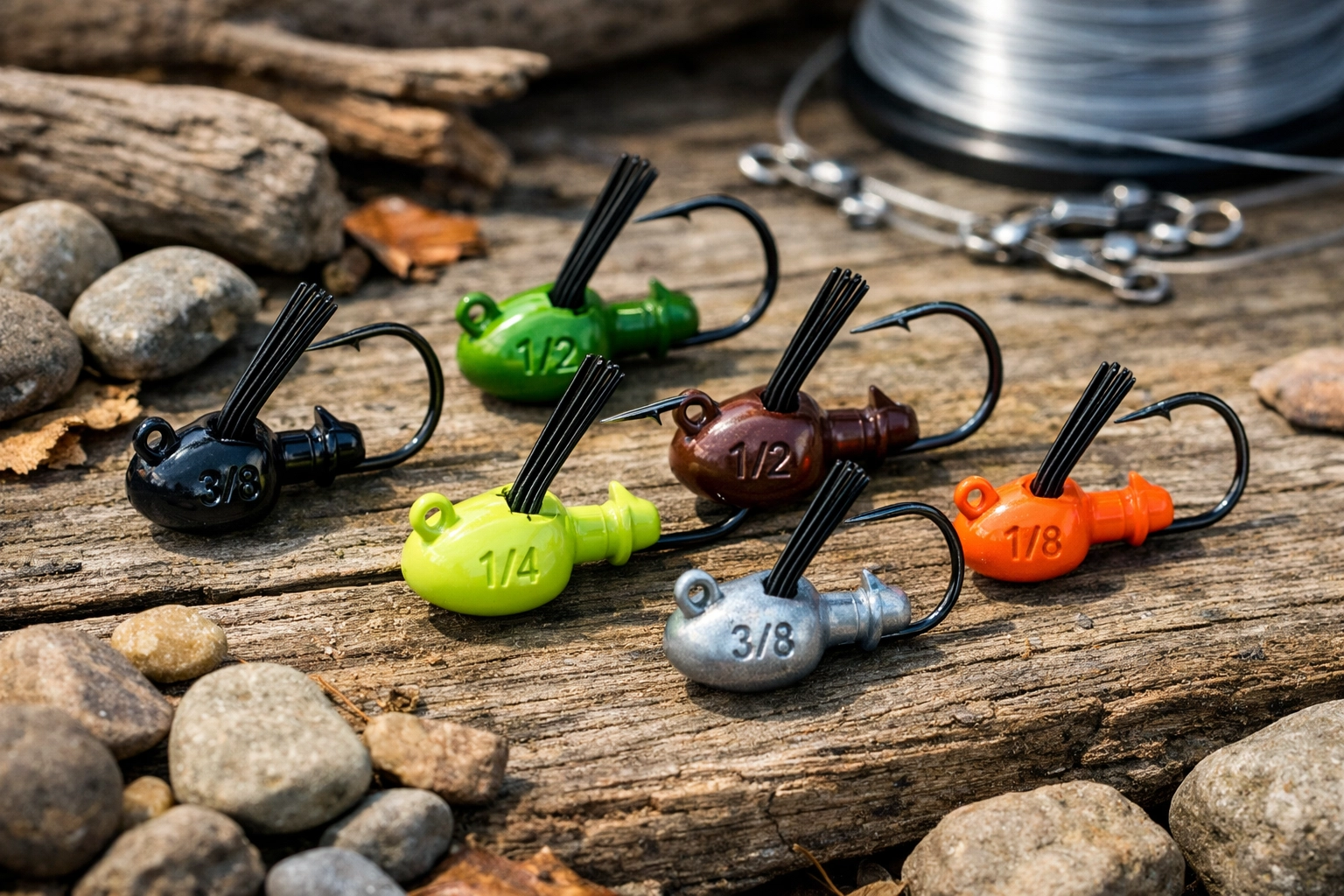
Jigs: Snag-Resistant and Pro-Grade
A confidence jig is non-negotiable. Snag-resistant jigs allow you to fish where bass live : in wood, rock, and heavy cover : without donating half your tackle box.
Flipping and pitching jigs with weed guards let you make precise, short-distance casts to tight cover. Casting jigs with molded heads handle long-range searching patterns.
The Gamagatzu Horizon Head LG maintains a horizontal posture for mid-strolling techniques with Tournament Grade Wire hooks and a rolling retrieve action : ideal for forward-facing sonar applications.
A well-built, snag-resistant jig head keeps you fishing instead of re-tying. It's a tactical advantage when every cast counts.
Terminal Tackle: The Details That Win
Hooks, weights, swivels, and wire leaders complete your rigs. These components seem small, but they determine hookup ratios and rig performance.
Ned rig heads (1/16th to 1/8th ounce) pair with finesse baits like the Salted Nad Roll : a 3-1/4" offering with floating plastic, salt, and built-in scent.
Drop-shot weights and specialized hooks for finesse fishing translate to more bites in tough conditions. Discipline in terminal tackle selection reflects preparation and attention to detail.
Technique-Specific Bass Fishing Gear
Finesse Fishing: Light, Precise, Effective
Finesse techniques rely on spinning gear, lighter line, and subtle presentations. Ned rigs, drop-shots, and small soft plastics dominate when bass are pressured or inactive.
The Z-Man Finesse TRD remains the gold standard. Pair it with a quality spinning reel like the Shimano Exsence B series (now available in 2500, 3000, and 4000 sizes) featuring an MGL rotor for bite detection before the rod loads.
Power Fishing: Covering Water and Triggering Reaction
Power techniques : spinnerbaits, crankbaits, swimbaits, and topwater : let you cover water efficiently and trigger aggressive strikes.
For power applications, the Daiwa Tatula 200 ($199) and Coastal 200 offer mid-range reliability for bass and stripers. Lew's Speed Spool RBX and Accel RX models provide full or shallow spool options for different line capacities.
Forward-Facing Sonar Techniques: The 2026 Evolution
Forward-facing sonar has changed the game. Anglers are now targeting individual fish with surgical precision, requiring specialized lures.
The Strike King Spotlight Shim-E Minnow excels in strolling and hover rigging with flared belly ribs that create micro-movements. The split-tail design of the Spotlight Split Minnow gives you precise depth control and realistic baitfish profiles.
These techniques demand focus, patience, and the right bass fishing lures to execute effectively.
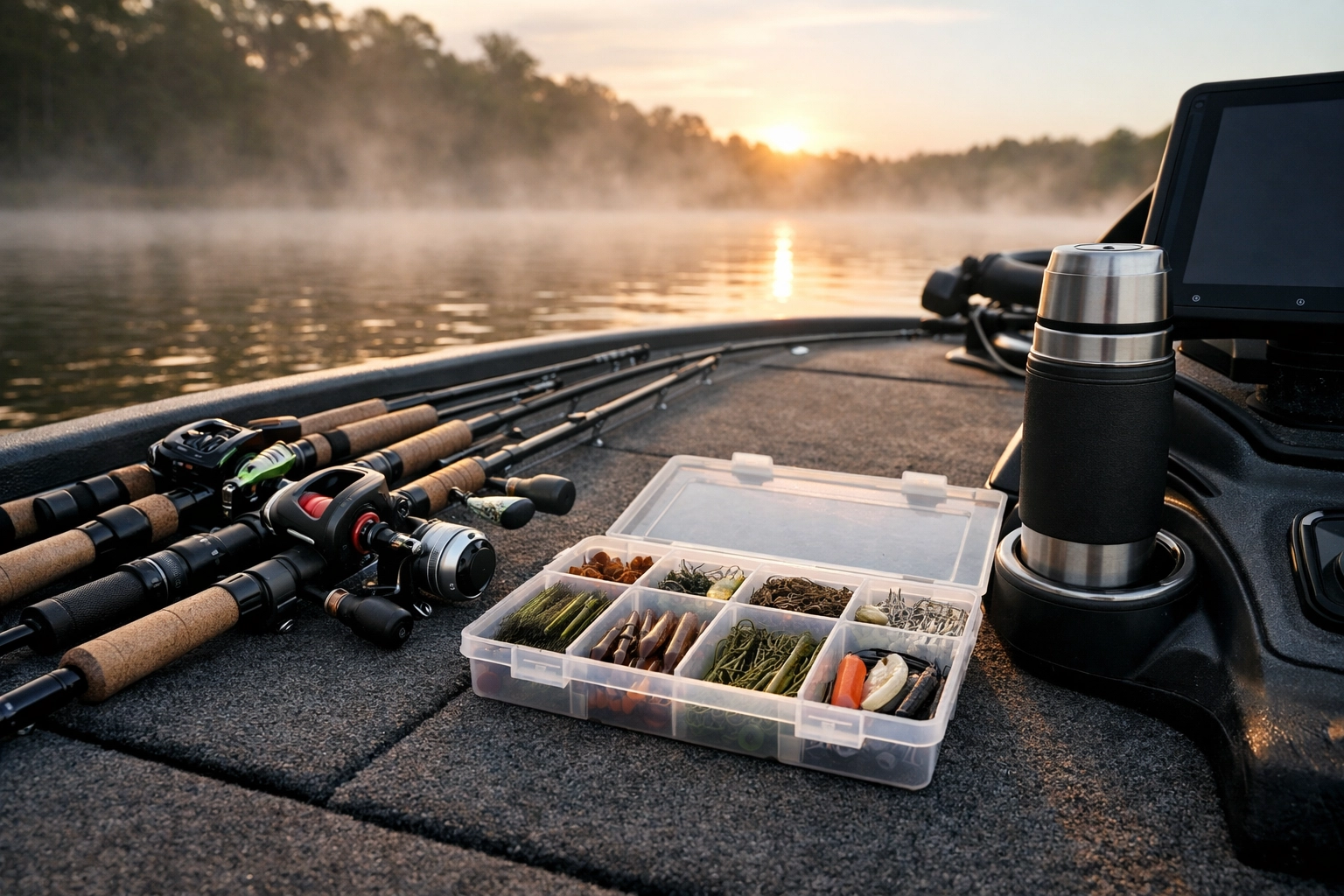
Building Your Tackle Box: The Strategic Approach
Start with versatile, high-percentage options. Shallow and medium-diving hard baits teach you depth control. Add soft plastics, jigs, and topwater options as your skills develop.
A well-organized tackle box demonstrates discipline. Blade baits, spinnerbaits, soft plastic worms, snag-resistant jigs, and topwater lures provide foundational versatility.
Avoid the temptation to buy every new lure. Focus on mastering core presentations with proven bass fishing tackle. Effectiveness comes from confidence and repetition, not variety.
The Lifestyle: Gear That Works On and Off the Water
At Anchor & Line Outfitters, we believe the bass fishing lifestyle extends beyond lures and rods. Your morning coffee before launching the boat, the shirt you wear on tournament day, the hat that shields you from the sun : these details matter.
Preparation breeds performance. The discipline you show in organizing tackle translates to how you approach every challenge. Whether you're a veteran angler or just starting out, the principles remain the same: see clearly, plan effectively, act with discipline, adapt when necessary.
Check out our full selection of bass fishing gear to build your pro-grade setup for 2026.
The 2026 Bottom Line
Bass fishing tackle in 2026 reflects an evolution toward precision, finesse, and technology-driven presentations. Snag-resistant jigs, fuzzy baits, forward-facing sonar lures, and refined hard baits give serious anglers the tools to compete at the highest levels.
But tools alone don't catch fish. Discipline, adaptability, and confidence do.
Build your tackle box with intention. Master high-percentage techniques. Fish with purpose. The lessons you learn on the water : patience, persistence, situational awareness : apply everywhere.
That's the Anchor & Line way.
Share This on Facebook
Caption Option 1:
The 2026 bass fishing tackle guide every serious angler needs. Snag-resistant jigs, forward-facing sonar lures, and pro-grade gear that actually matters. Built by anglers, for anglers. 🎣
Caption Option 2:
Stop guessing. Start fishing with confidence. This is the ultimate bass fishing tackle breakdown for 2026 : soft plastics, hard baits, technique-specific gear, and the discipline to use them right.
Caption Option 3:
Your tackle box reflects your commitment. Here's what belongs in it for 2026: snag-resistant jigs, fuzzy baits, precision lures, and the mindset to execute. Read the full guide. ⬇️
Headline Options:
- The Ultimate 2026 Bass Fishing Tackle Guide
- What Every Bass Angler Needs in 2026
- Pro-Grade Bass Fishing Gear That Works