
Sunday School: Iron, Wood, and the Timber Claw Transition
At Anchor & Line Outfitters, we preach a philosophy that extends far beyond the edges of a bass boat. We believe that the way you approach the water is a direct reflection of how you approach your life, your family, and your faith. It’s about more than just a limit in the livewell; it’s about the discipline of the transition.
Right now, we are in one of the most testing periods of the year: the post-spawn. The frantic energy of the spring has faded, the fish are lethargic, and the "easy" bites have disappeared. In times like these, most people look for the path of least resistance. They reach for the "usual worm," hoping for a lucky strike. But we believe in a different strategy: one rooted in precision, heavy cover, and the iron-clad discipline required to hunt big fish when they don’t want to be found.
Welcome to the Sunday Service. Today, we’re talking about iron, wood, and why the ALO Timber Claw is the tactical choice for the man who refuses to settle for the easy way out.
The Scripture of the Unit: Iron Sharpens Iron
Before we talk about tackle, we have to talk about the brotherhood. In the military, you never go over the wire alone. You operate as a unit, knowing that the man to your left and right has been forged in the same fire as you. This is the core of the ALO community.
"As iron sharpens iron, so one person sharpens another." : Proverbs 27:17
This verse is often quoted, but rarely understood in its grittiness. For iron to sharpen iron, there must be friction. There must be heat. There must be a deliberate clashing of two hard surfaces to remove the dullness and reveal the edge.
In our lives, we need brothers who aren't afraid to call us out. We need a community that pushes us to be better fathers, better leaders, and better anglers. At Anchor & Line, we don't just sell gear; we build a unit. Whether we are discussing the finer points of the Timber Claw grind or sharing a word of encouragement during a rough season, the goal is the same: to sharpen the edge.
The Post-Spawn Reality: The Lethargy and the Wood
The post-spawn transition is a period of recovery. Those big female bass have spent weeks on the beds, exhausted from the spawn and the fluctuating water temperatures. They aren't looking for a marathon; they’re looking for a place to hide and a high-protein meal that requires minimal effort to catch.
This is where situational awareness becomes your greatest asset. While the "weekend warriors" are still beating the banks with high-speed moving baits, the disciplined angler knows the fish have moved to the wood. They are tucked deep into the heart of fallen timber, brush piles, and standing trees. They are looking for shade, security, and an easy ambush point.
Navigating this transition requires a shift in mindset. You have to move from a "covering water" mentality to a "surgical strike" mentality. You aren't just casting; you are picking apart the cover, branch by branch, until you find the exact spot where that exhausted giant is resting.
Tactical Choice: The Timber Claw vs. The "Usual Worm"
When things get tough, the natural human instinct is to simplify. For most folks, that means reaching for a finesse worm or a Senko. It’s the "usual worm" approach: slow, passive, and low-risk.
Now, don't get us wrong; a worm catches fish. We’ve all spent hours mastering the Carolina rig or dragging a lizard. But in the thick of the post-spawn timber, the worm has a massive disadvantage: it lacks the presence and the authority to trigger a big, lethargic bass into an aggressive reaction.
1. The Power of the Profile
A worm is a snack. The ALO Timber Claw Jig is a meal. When a big female is recovering from the spawn, she wants the biggest return on her energy investment. A 1/2 oz or 3/4 oz jig with a bulky trailer mimics a crawfish or a bluegill: exactly what she needs to regain her strength. The Timber Claw provides a larger silhouette that demands attention in the dark shadows of a brush pile.
2. Efficiency in Heavy Cover
The "usual worm" often gets hung up in the "gnarly" stuff. If you’re using a light weight, the worm can't penetrate the thickest parts of the wood. If you use a heavy weight on a Texas rig, it often wedges itself into cracks. The Timber Claw was engineered specifically for this mission. Its head design is built to deflect off wood, allowing it to slide through the cover rather than getting stuck in it. This means more time in the strike zone and less time re-tying.
3. The Reaction Trigger
Fishing a worm is often about waiting for a fish to decide it wants to eat. Fishing a jig is about making the fish eat. When that Timber Claw thumps onto a limb and then drops quickly into the heart of the cover, it triggers a predatory instinct. It’s a tactical intrusion that a big bass can’t ignore.
The Discipline of the Grind: On and Off the Water
There is a certain grit required to fish a jig all day in the post-spawn. It’s hard work. You’re flipping into places where you’re likely to lose gear. You’re focusing on every vibration of the line, waiting for that "tink" that signals a bite.
This translates directly to our walk of faith and our leadership in the world.
It’s easy to live a "worm" life: staying in the clear water, avoiding the thickest problems, and hoping things just work out. But the Timber Claw life is about going where the pressure is. It’s about having the discipline to stay focused when the "bite" is slow. It’s about knowing that the greatest rewards are often found deep in the places others are too afraid to go.
We see this reflected in stories like the 6.52 pound catch, where faith and fishing collide. It’s about the peace that comes from preparation and the discipline to execute the plan, even when the conditions are less than ideal.
Weekly Lessons from the Mission Briefing
As you head into this week, keep these principles in your tackle box:
Don't Settle for the Easy Bite: If everyone is throwing a worm, look for the cover they’re avoiding and drop a Timber Claw in it. Success is found in the places others overlook.
Embrace the Friction: Seek out the "iron sharpens iron" moments. If someone is pushing you to be better, don't shy away from the heat. That's how you get your edge back.
Trust Your Gear and Your Faith: Whether it’s a high-performance jig or a foundational scripture, lean on what was built to handle the pressure.
Stay in the Cover: When life gets exhausting, don't just wander aimlessly. Find your "wood": your place of rest and recovery: and stay grounded in your values.
Join the Unit
The post-spawn transition isn't just a season for the fish; it’s a season for us to evaluate our own discipline. Are we taking the easy path, or are we putting in the work to hunt the giants?
At Anchor & Line Outfitters, we’re here to equip you for the mission. From our heavy-hitter jigs to our tactical hats that keep you focused on the water, we are committed to the brotherhood of the outdoors.
Don't wait for luck to find you. See clearly, plan effectively, and act with discipline.
Shop the ALO Timber Claw Jig today and dominate the post-spawn transition.
Anchor & Line Outfitters
See Clearly. Plan Effectively. Act with Discipline.
The Ultimate Guide to Bass Fishing Tackle: What Every Angler Needs in 2026
![[HERO] The Ultimate Guide to Bass Fishing Tackle: What Every Angler Needs in 2026](https://cdn.marblism.com/F57qOIBvIOI.webp)
We believe that bass fishing tackle isn't just about filling a boat or a tackle box : it's about preparation, confidence, and execution. The right bass fishing gear translates to more time fishing and less time guessing. Whether you're a tournament angler running forward-facing sonar or a weekend warrior hitting local docks, your tackle setup reflects your commitment to the discipline.
This is the 2026 ultimate guide to building a pro-grade bass fishing tackle arsenal that works. No fluff. Just what serious anglers need.
Why Your Tackle Matters More Than You Think
Every piece of fishing tackle online you add to your box should serve a purpose. High-percentage lures breed confidence. Confidence breeds better presentations. Better presentations lead to more bites : on the water and in every area where focus and preparation matter.
The gear you carry shapes how you fish. It determines whether you commit to that gnarly laydown or skip it because you don't trust your jig. It's the difference between adapting to changing conditions and sticking with what's comfortable but ineffective.
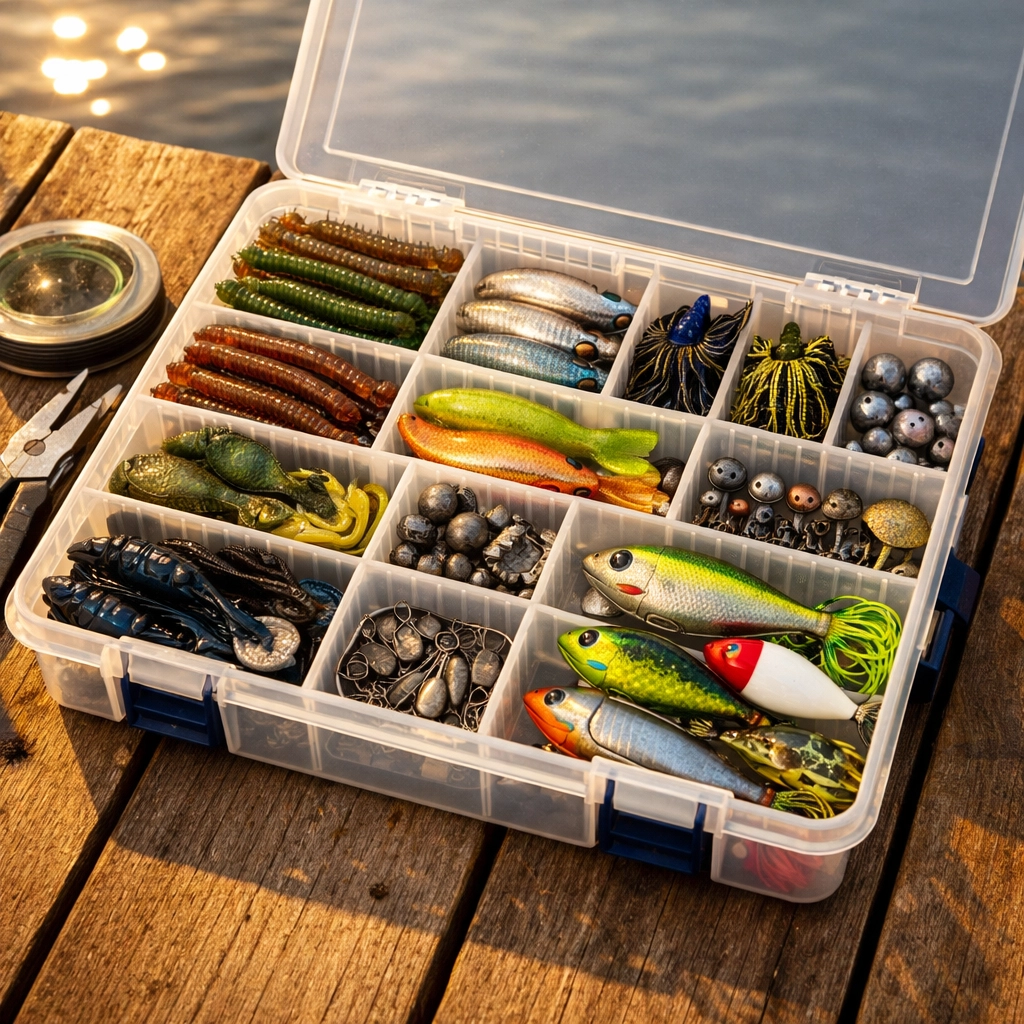
The Core Bass Fishing Tackle Categories for 2026
Soft Plastic Baits: The Foundation
Soft plastics form the backbone of modern bass fishing. These are the best bass lures for versatility, and 2026 has brought refinements that matter.
Stick baits and finesse worms like the Z-Man Finesse TRD remain industry standards because they work under pressure. The Zoom Thick Trick Worm : a beefier version of the classic : casts better and draws bigger bites when skipped under docks or pitched into heavy cover.
Creature baits continue to dominate flipping and punching scenarios. Lake Fork's Pro Hog excels in mat-fishing and bed-fishing situations where you need a bulky profile that provokes reaction strikes.
Fuzzy baits emerged strong in 2025 and aren't going anywhere. The Z-Man Fuzzy TRD and Strike King Tumbleweed bring a 12-sided, heavily salted design that works in both sinking and floating formulas. They excel in finesse applications where traditional soft plastics get ignored.
Hard Baits: Searching and Triggering Bites
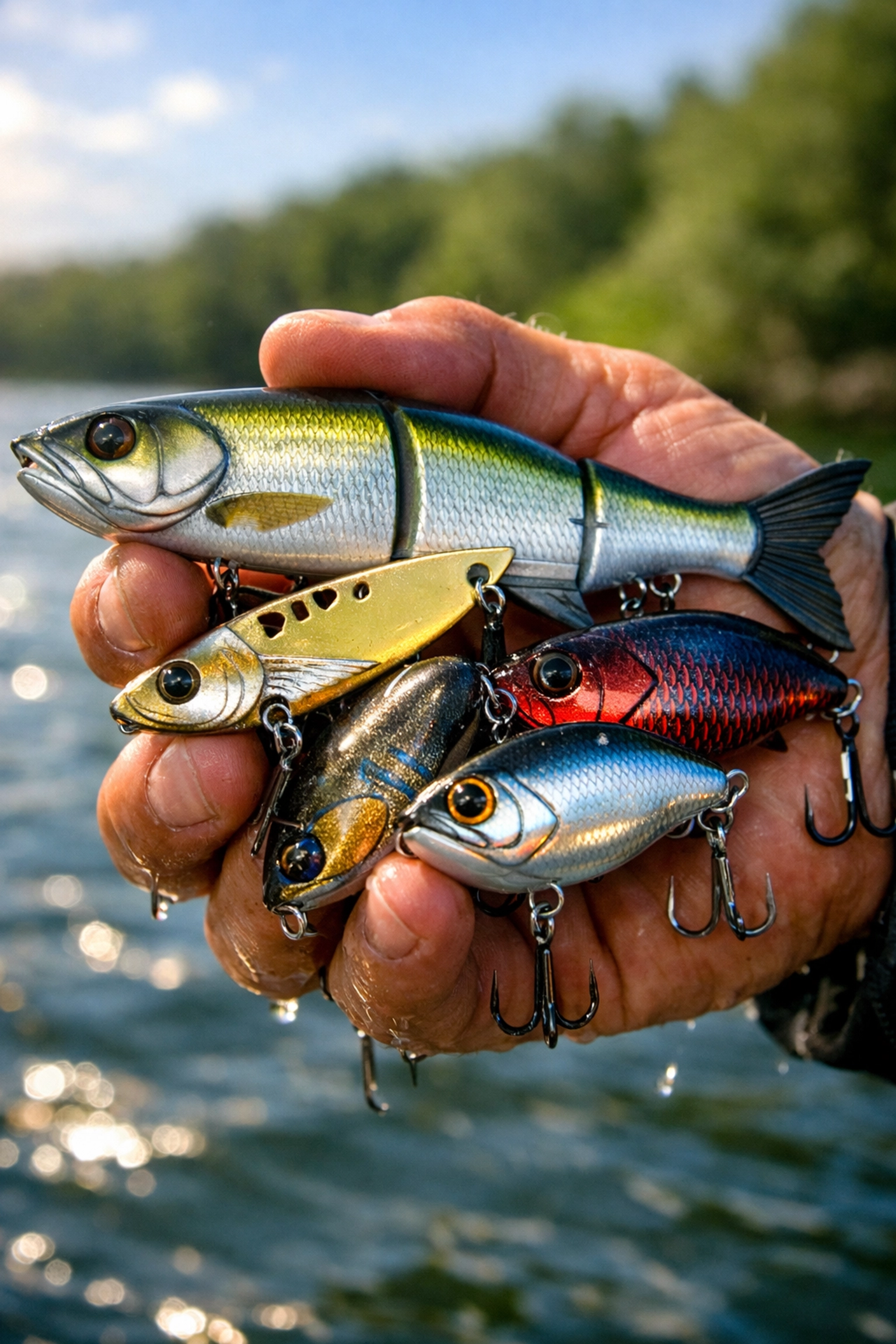
Hard baits give you the ability to cover water efficiently and trigger reaction strikes from neutral fish.
Blade baits and spoons remain essential for deep, cool-water scenarios. Their wobble and vibration on the fall trigger bites when bass are lethargic.
The Berkley Chop Block (a two-segmented glide bait in 6", 8", and 10" versions) provides a tournament-grade presentation for big fish. The Berkley Ripfish combines the fast-drop characteristics of a lipless crankbait with glide bait advantages and flat-bottom design for precise depth control.
For forward-facing sonar techniques, the Strike King Spotlight Split Minnow (3" and 4") features a hyper-realistic profile with a split-tail design for depth control and precise strolling presentations.
Jigs: Snag-Resistant and Pro-Grade
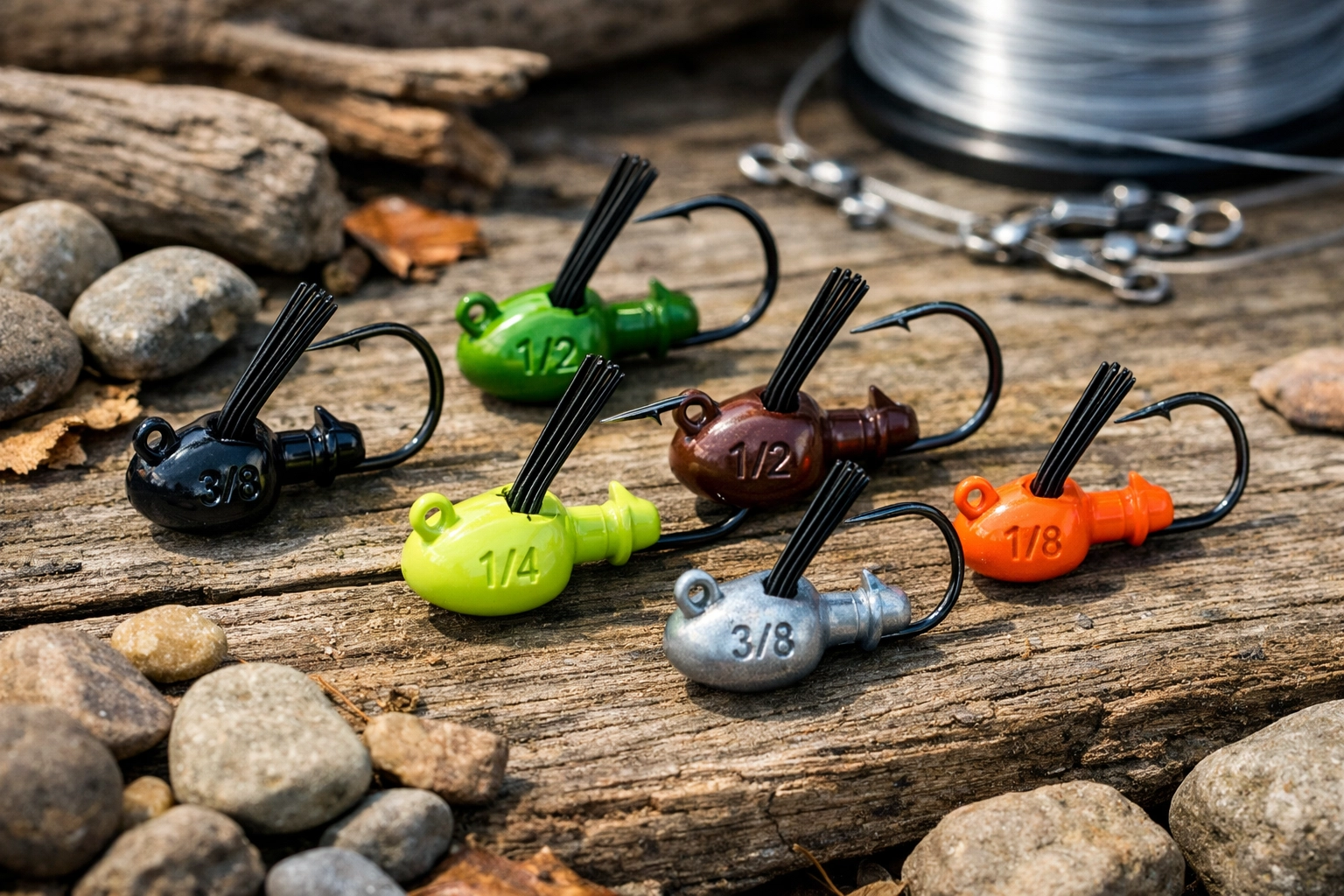
A confidence jig is non-negotiable. Snag-resistant jigs allow you to fish where bass live : in wood, rock, and heavy cover : without donating half your tackle box.
Flipping and pitching jigs with weed guards let you make precise, short-distance casts to tight cover. Casting jigs with molded heads handle long-range searching patterns.
The Gamagatzu Horizon Head LG maintains a horizontal posture for mid-strolling techniques with Tournament Grade Wire hooks and a rolling retrieve action : ideal for forward-facing sonar applications.
A well-built, snag-resistant jig head keeps you fishing instead of re-tying. It's a tactical advantage when every cast counts.
Terminal Tackle: The Details That Win
Hooks, weights, swivels, and wire leaders complete your rigs. These components seem small, but they determine hookup ratios and rig performance.
Ned rig heads (1/16th to 1/8th ounce) pair with finesse baits like the Salted Nad Roll : a 3-1/4" offering with floating plastic, salt, and built-in scent.
Drop-shot weights and specialized hooks for finesse fishing translate to more bites in tough conditions. Discipline in terminal tackle selection reflects preparation and attention to detail.
Technique-Specific Bass Fishing Gear
Finesse Fishing: Light, Precise, Effective
Finesse techniques rely on spinning gear, lighter line, and subtle presentations. Ned rigs, drop-shots, and small soft plastics dominate when bass are pressured or inactive.
The Z-Man Finesse TRD remains the gold standard. Pair it with a quality spinning reel like the Shimano Exsence B series (now available in 2500, 3000, and 4000 sizes) featuring an MGL rotor for bite detection before the rod loads.
Power Fishing: Covering Water and Triggering Reaction
Power techniques : spinnerbaits, crankbaits, swimbaits, and topwater : let you cover water efficiently and trigger aggressive strikes.
For power applications, the Daiwa Tatula 200 ($199) and Coastal 200 offer mid-range reliability for bass and stripers. Lew's Speed Spool RBX and Accel RX models provide full or shallow spool options for different line capacities.
Forward-Facing Sonar Techniques: The 2026 Evolution
Forward-facing sonar has changed the game. Anglers are now targeting individual fish with surgical precision, requiring specialized lures.
The Strike King Spotlight Shim-E Minnow excels in strolling and hover rigging with flared belly ribs that create micro-movements. The split-tail design of the Spotlight Split Minnow gives you precise depth control and realistic baitfish profiles.
These techniques demand focus, patience, and the right bass fishing lures to execute effectively.
Building Your Tackle Box: The Strategic Approach
Start with versatile, high-percentage options. Shallow and medium-diving hard baits teach you depth control. Add soft plastics, jigs, and topwater options as your skills develop.
A well-organized tackle box demonstrates discipline. Blade baits, spinnerbaits, soft plastic worms, snag-resistant jigs, and topwater lures provide foundational versatility.
Avoid the temptation to buy every new lure. Focus on mastering core presentations with proven bass fishing tackle. Effectiveness comes from confidence and repetition, not variety.
The Lifestyle: Gear That Works On and Off the Water
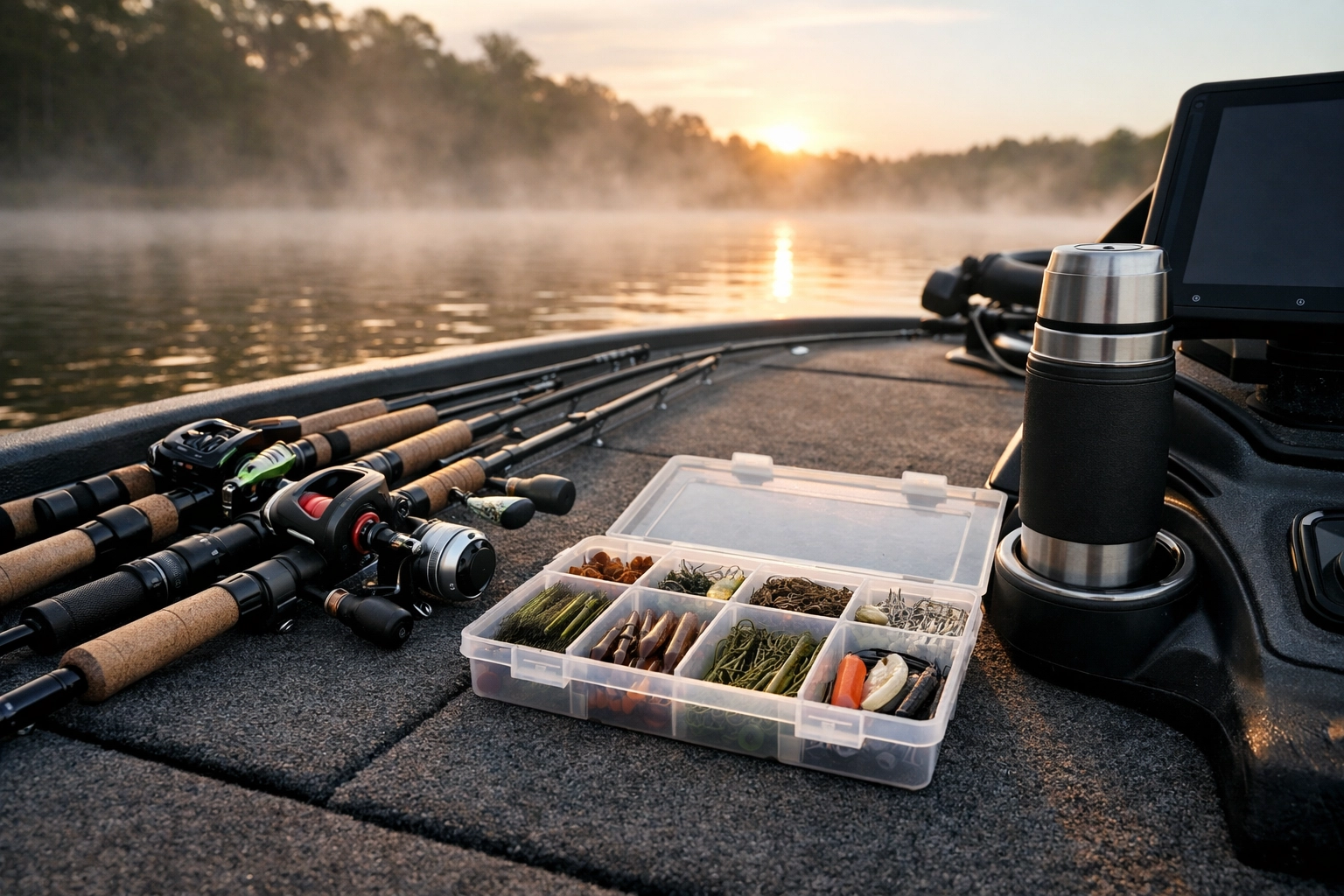
At Anchor & Line Outfitters, we believe the bass fishing lifestyle extends beyond lures and rods. Your morning coffee before launching the boat, the shirt you wear on tournament day, the hat that shields you from the sun : these details matter.
Preparation breeds performance. The discipline you show in organizing tackle translates to how you approach every challenge. Whether you're a veteran angler or just starting out, the principles remain the same: see clearly, plan effectively, act with discipline, adapt when necessary.
Check out our full selection of bass fishing gear to build your pro-grade setup for 2026.
The 2026 Bottom Line
Bass fishing tackle in 2026 reflects an evolution toward precision, finesse, and technology-driven presentations. Snag-resistant jigs, fuzzy baits, forward-facing sonar lures, and refined hard baits give serious anglers the tools to compete at the highest levels.
But tools alone don't catch fish. Discipline, adaptability, and confidence do.
Build your tackle box with intention. Master high-percentage techniques. Fish with purpose. The lessons you learn on the water : patience, persistence, situational awareness : apply everywhere.
That's the Anchor & Line way.
Share This on Facebook
Caption Option 1:
The 2026 bass fishing tackle guide every serious angler needs. Snag-resistant jigs, forward-facing sonar lures, and pro-grade gear that actually matters. Built by anglers, for anglers. 🎣
Caption Option 2:
Stop guessing. Start fishing with confidence. This is the ultimate bass fishing tackle breakdown for 2026 : soft plastics, hard baits, technique-specific gear, and the discipline to use them right.
Caption Option 3:
Your tackle box reflects your commitment. Here's what belongs in it for 2026: snag-resistant jigs, fuzzy baits, precision lures, and the mindset to execute. Read the full guide. ⬇️
Headline Options:
- The Ultimate 2026 Bass Fishing Tackle Guide
- What Every Bass Angler Needs in 2026
- Pro-Grade Bass Fishing Gear That Works